A few weeks ago I decided to start a bedtime routine to hopefully help me develop the habit of going to bed earlier. I’m a night owl, and I frequently would stay up past midnight. I wanted to change that – not by much, but if I can regularly go to bed by 11:00, that would be great.

The routine I’ve established is to brush my teeth, wash/tone/moisturize my face, put on my PJs, and then prepare a relaxing cup of herbal tea. I sit in my recliner and slowly sip my tea – savoring it – being mindful. When I finish the tea, I rinse the cup and put it away, and then I go to bed.
The research behind establishing a bedtime routine is that our bodies become accustomed to the pattern. So once that herbal tea hits my system, my body says, “Okay, I’m sleepy! Go to bed, Carol!”
I’ve been doing better on WW since I started this routine. I don’t know if there is a connection between the two or not. However, it is working for me, and I’m enjoying the variety of herbal teas that I’m trying. I’m drinking herbal tea during the day, too. As the weather gets cooler, I will likely drink it even more often during the day.

And I have to mention that one thing that piqued my interest in herbal teas is that I’m a fan of the History Channel’s show “Alone.” And this past season, so many of the contestants talked about making tea from the plants they found growing around them. “How to make teas” was probably one of the topics that they covered in their “boot camp” before the competition started. And I can understand how knowing which plants to use and how to make the tea would be beneficial in a situation such as that.
This afternoon, I started researching herbal teas. I haven’t read much about them before now. I was eager to find out if herbal teas offer any concrete health benefits. And, by George, they do!
First of all, herbal teas aren’t really teas because they aren’t made from tea leaves. They’re called “tisanes” (I’ve never heard or seen that word before!) or, in more familiar language, they are “infusions.” They can be made from edible spices, herbs, fruit, bark, roots, flowers, or any combination of the aforementioned. An infusion allows you to enjoy the benefits of a plant in an easily digestible form. And just about everything I read extolled the benefits – even including the fact that usually if you’re drinking herbal tea, you’re not eating. Thus, it may help to control weight. LOL! “May” being the operative word in that last sentence.
I went on a bit of a buying spree when I decided to become an herbal tea drinker. I’d had some Two Leaves and a Bud tea at a restaurant a few years ago, and I loved it. So I got some of their “Better Belly Blend” and some “Chamomile.” Then I asked my Facebook friends for herbal tea recommendations, and bought some that they recommended.

The composition of an herbal tea determines the health benefits. For example, chamomile is good for relaxation, while ginger helps with digestion. Here’s a chart with some of the more popular herbal tea ingredients.

The good news is that herbal teas are very popular, and you can find high quality teas in most grocery stores. Of course, you can get just about all of them from Amazon, although often you have to buy more than one box of them – which makes it a little less tempting. When you only drink 2-3 cups a day, you don’t need a dozen 15-bag boxes!
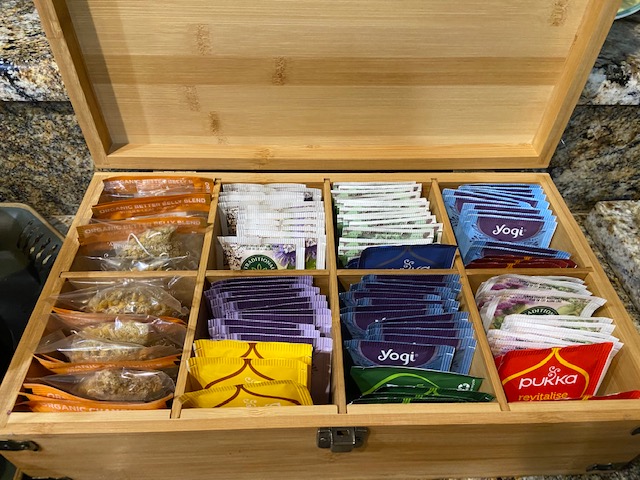
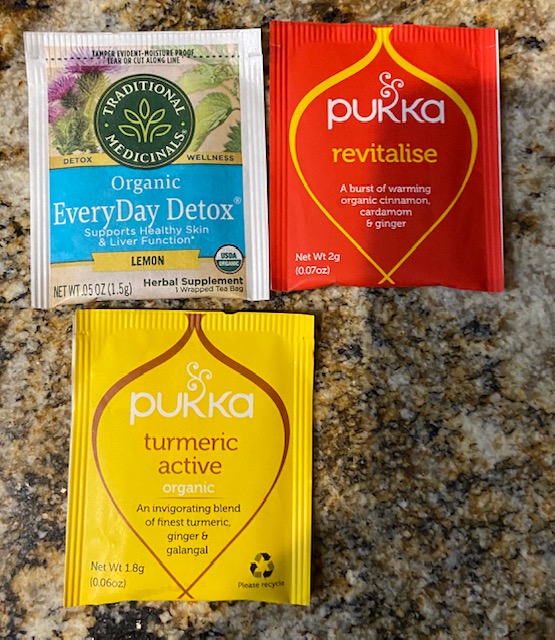
There are blends for just about everything. I bought some for sleep and some for digestion, but I also got a detox tea, and some that would perk me up a little, if needed.
 The dictionary defines momentum as “strength or force gained by motion or by a series of events.” After two weeks of gaining weight while completely sticking to my WW plan, I realized my enthusiasm for sticking with my commitment was compromised – and I yielded to that lack of enthusiasm over the weekend. It’s almost humorous to think of the things that I eat when I’m feeling defeated. It varies. This time it was Rice Krispies Treats. I actually lost count of how many I ate. I logged it as 8, and I think that’s accurate . . . but I’m not 100% sure.

![Atomic Habits: An Easy & Proven Way to Build Good Habits & Break Bad Ones by [James Clear]](https://m.media-amazon.com/images/I/51Tlm0GZTXL._SY346_.jpg) Sometimes we come across a book that actually changes our lives. That happened to me a couple years ago when I read a book titled Atomic Habits by James Clear. The basic premise is that if we set big goals, we often set ourselves up for defeat since big and perfect goals take so much time and effort. However, if we work on small habits – 3 minutes of exercise each morning, cutting out one teaspoon of sugar in our coffee, writing one thank you note each week, making two business calls before lunch – then it becomes like compound interest. The benefits snowball over time.
Sometimes we come across a book that actually changes our lives. That happened to me a couple years ago when I read a book titled Atomic Habits by James Clear. The basic premise is that if we set big goals, we often set ourselves up for defeat since big and perfect goals take so much time and effort. However, if we work on small habits – 3 minutes of exercise each morning, cutting out one teaspoon of sugar in our coffee, writing one thank you note each week, making two business calls before lunch – then it becomes like compound interest. The benefits snowball over time. Living Real With Carol